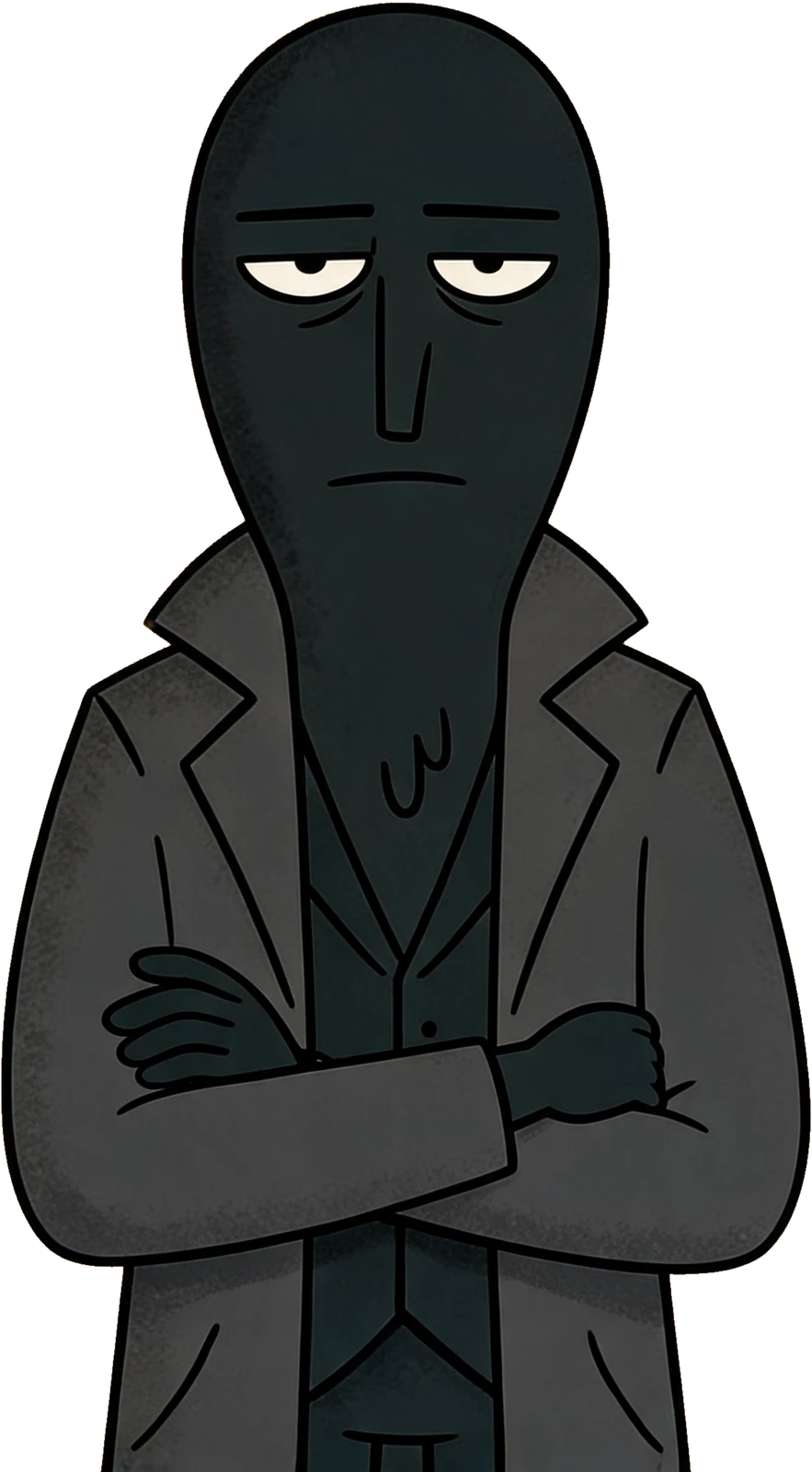
The narrator, a tall drawn figure in a grey coat, appears in short animated scenes as you scroll.
It happened this week.
Now it's a one-minute film.
Oxford scientists found magma twenty-four kilometres under Mars. A county board voted six to nothing against a building full of computers. Four-thousand-year-old letters were read without breaking their clay envelopes. We pick one, and we take a minute.
Every short is a storyboard
read aloud.
Around nineteen drawings, each on screen for three seconds. The narrator is drawn once from a single reference and turns up in three of them. Captions stay clear of the bottom of the frame, where the Shorts player writes its own.
Recent shorts,newest first.
The number is the channel's own episode count. Hover a row to see the frame that opens it.
- 24 Mars Is Full of Magma and It Shouldn't Be next up 07 Sep 2026 0:57
- 23 The 4,000-Year-Old Letters No One Could Open 07 Sep 2026 0:58
- 22 Why 260 Towns Are Banning AI Data Centers 05 Sep 2026 0:56
- 21 Neptune's Moons Are Made of Dead Moons 27 Aug 2026 0:53
- 20 The Star With a Black Hole Inside 26 Aug 2026 0:54
- 19 Chernobyl's Elephant's Foot Still Kills 23 Aug 2026 0:56
- 17 The Machine That Will Outlive Everyone 22 Aug 2026 0:57
One thing that happened,four days later.
The same four steps every time. None of them are secret, and two of them are mostly waiting.
-
01
Pick
The week's news gets scanned for a subject people are already typing into a search bar: Mars, a data centre, a sealed letter. Ideas without a name get skipped, however clever they sound.
-
02
Write
About a hundred and thirty words. The first line is the title, read cold. Each claim gets traced back to the paper or the vote it came from before anyone records a word.
-
03
Draw
Nineteen or so scenes in a flat explainer style. Every scene description names its room, otherwise an underground cave turns into a sunny field. The narrator comes from one reference sheet and appears in three of them.
-
04
Cut
Three seconds a scene. Captions sit above the bottom fifteen percent, where the Shorts player prints its own title. Then a second look at every frame, because the first pass always misses one.
Video 24, second by second
Hover a scene
Scene starts taken from the build file of video 24. Ochre marks the three scenes the narrator is in.
Things people askin the comments.
Who is the narrator?
A drawn figure in a grey coat with a long face and no name. He was designed once, in August 2026, and every video since draws him from the same reference sheet so he stays the same person. He does not smile. We have tried.
Whose voice is that?
The channel owner's. It was cloned from their own recordings and runs on a local machine, so a script can be read at two in the morning without a microphone in the room. No stock narrator, no rented voice.
Why under a minute?
Because that is where the audience is. Almost every view arrives from the Shorts feed, and the videos that hold people to the end are the ones with a single named subject and no detours. A minute is long enough for one of those.
How do you know it's true?
Each claim traces to the paper, vote or dataset it came from, and the source is named in the description. When one draft credited the wrong institution for a discovery, the narration was re-recorded before upload. That is the rule, and it has been used.
Can I suggest a topic?
Yes. Leave it in the comments of the newest short. Subjects with a name and a date get read first.